
· by Michael Blair, Nashville's Landscapers
A plant tag that says deer resistant reads like a promise. It is closer to a ranking: this is one deer will usually reach for later, after the plants they like better are gone. In Brentwood, Hendersonville and the other parts of Middle Tennessee where neighborhoods meet woods, that difference decides whether a new bed survives its first spring. Here is what the research says deer go after, what they tend to leave, and how our planting crews put that to work.
Which plants do deer eat first?
Their favorites, the plants a deer seeks out before anything else, and a tag that says deer resistant only means a plant is not one of them. NC State Extension’s fact sheet on deer resistant plants, written by Charlotte Glen for North Carolina landscapes and posted by UT’s horticulture program, says no plant is deer proof and that a hungry deer will eat almost anything to survive. It also says that in stressful stretches such as a drought, plants deer normally avoid may be damaged.
The sheet sorts plants into three groups rather than two: frequently damaged, which are the favorites deer seek out first; occasionally damaged, which they turn to once the favorites are gone; and seldom damaged, which they rarely eat unless nothing else is left. It also says feeding preferences change from region to region and even from season to season. Its plant lists were written for central and southeastern North Carolina, so we use the sheet for how deer choose, and judge any particular plant by how it holds up in yards here.
Why do deer eat plants in my yard?
Because a yard is often the softest, wettest food around. The NC State sheet says deer prefer vegetation that is soft to the touch and high in water, especially relish flower buds, and will eat almost anything in spring as tender new growth comes out. It adds that over-fertilized and over-watered plants are particularly lush and appealing to them. A freshly planted, well-fed, regularly watered bed is close to the exact thing it describes.
And in some neighborhoods there are simply a lot of deer. Hendersonville’s 2025 deer report, prepared for the city by USDA Wildlife Services from a thermal aerial survey on April 16, 2025, counted 634 deer, about 16.7 per square mile citywide, against a Tennessee Wildlife Resources Agency estimate of 19.6 per square mile statewide as of 2023. Parts of the city ran well above that: about 27.5 per square mile on the Saunders Ferry peninsula, 36.3 on the Indian Lake peninsula and 49.6 around the Country Hills golf course. We have not found a published count for Brentwood or Williamson County, but the Sumner County figures are a fair picture of what a wooded edge in Hendersonville can carry.
How do I plant a yard so deer leave it alone?
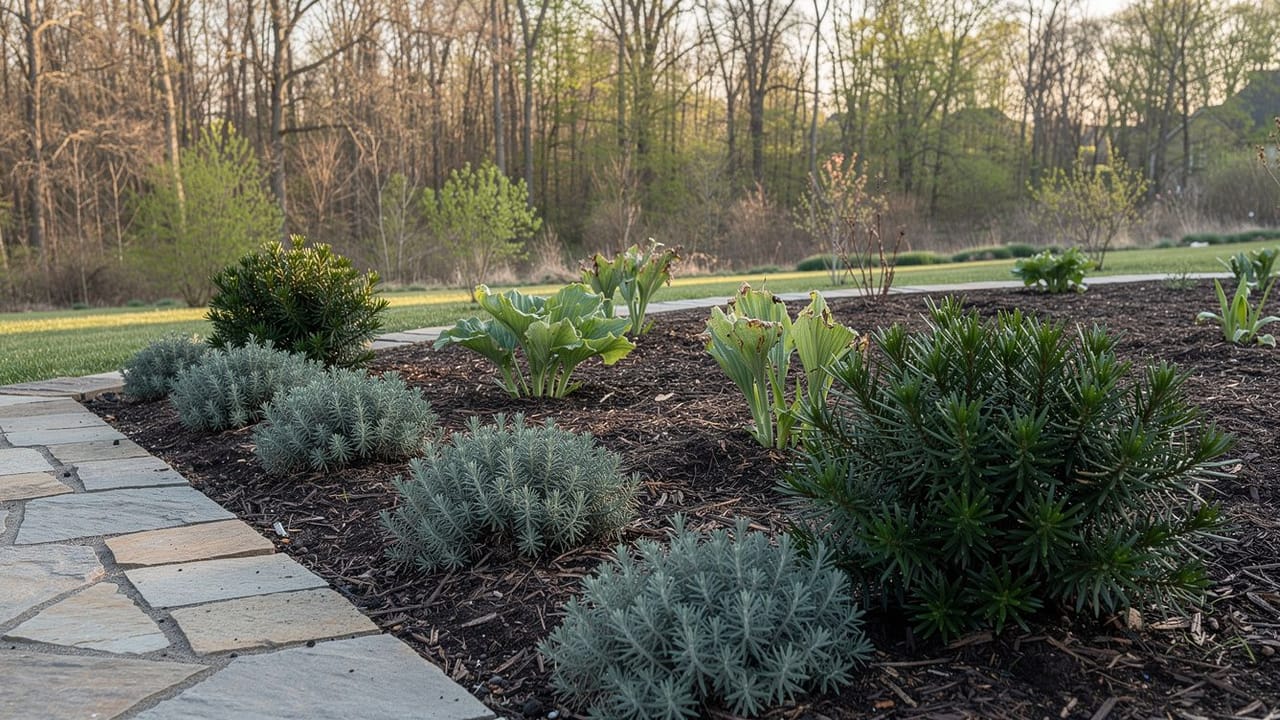
Lean on the traits deer avoid, put the riskiest plants where deer are least likely to reach, and do not make the bed lusher than it needs to be. The NC State sheet lists the common traits of plants deer prefer not to eat: thorny or prickly leaves or stems, strong scents and pungent tastes such as herbs, poisonous parts or thick latex-like sap, and hairy leaves.
- Front the bed with plants that have those traits, along the walk and the lawn edge where deer browse first, and keep the plants they favor closer to the house.
- Feed and water for health, not for a flush of soft growth. A new planting needs steady water to root in, and our post on the right month to plant covers the timing, but extra fertilizer makes exactly the lush growth the sheet warns about.
- Expect the first spring to be the test. New growth is when the sheet says deer eat almost anything, so a bed that comes through April and May with little damage is usually a sound mix.
- Do not feed the deer. Hendersonville’s report recommends a continued citywide ban on feeding wildlife, and a feeder at the edge of the yard brings deer closer to the beds.
Planting a yard at the edge of the woods
On a lot that backs onto woods, in Brentwood or anywhere else we work, we treat deer as part of the site, the same way we treat the clay and the slope, and choose plants accordingly. The plant list itself depends on sun, drainage and soil as much as on deer, and our post on plants that thrive in Nashville clay covers that side.
Hendersonville’s report also recommends an annual non-lethal workshop to teach residents how to manage deer damage on their own property, which is a fair sign that the problem is handled one yard at a time. If you want a bed planned around the deer that already visit your yard, tell us about the site and we will walk it with you as part of a landscape design.
Sources
- NC State Extension (Charlotte Glen), Deer Resistant Plants, posted by UT Horticulture — A North Carolina fact sheet: no plant is deer proof; drought and spring growth; soft, high-water growth and buds; over-fertilized and over-watered plants; traits of plants deer avoid; frequently, occasionally and seldom damaged groups; preferences vary by region and season
- City of Hendersonville and USDA Wildlife Services, 2025 Hendersonville Deer Report — April 16, 2025 thermal aerial survey: 634 deer, about 16.7 per square mile citywide against a TWRA statewide estimate of 19.6 (2023); higher densities on the Saunders Ferry and Indian Lake peninsulas and the Country Hills golf course; recommendations including a feeding ban and an annual non-lethal workshop
FAQ
Deer Resistant Planting: What the Label Does Not Promise — questions
Does deer resistant mean deer proof?
No. NC State Extension’s deer fact sheet says no plant is deer proof and that a hungry deer will eat almost anything to survive. Deer resistant means deer usually prefer other plants first. When deer are hungry or stressed, as in a drought, they will eat the resistant ones too.
Do deer eat plants more in a drought?
They can. NC State Extension’s fact sheet says that during stressful times such as drought, plants deer usually avoid may be damaged. The same sheet says deer prefer soft, high-water growth, so a watered bed in a dry spell is a likely target, resistant plants included.
Does fertilizing make deer eat plants more?
Heavy feeding can. NC State Extension’s fact sheet says over-fertilized and over-watered plants are particularly lush and appealing to deer. Feed a planting enough to stay healthy and root in, but pushing a flush of soft new growth with extra fertilizer makes it more tempting.
Do deer prefer new spring growth?
Yes. NC State Extension’s fact sheet says deer will eat almost anything in spring as tender new growth emerges, and that they prefer soft vegetation high in water, flower buds especially. That makes the first spring after planting the hardest test of whether a bed was planned well for deer.
Are there any plants deer will not eat?
Not with certainty. NC State Extension says no plant is guaranteed. What it describes are traits deer tend to avoid: thorny or prickly leaves and stems, strong scents and pungent tastes such as herbs, poisonous parts or thick latex sap, and hairy leaves. Plants with those traits are usually eaten last.