
· by Michael Blair, Nashville's Landscapers
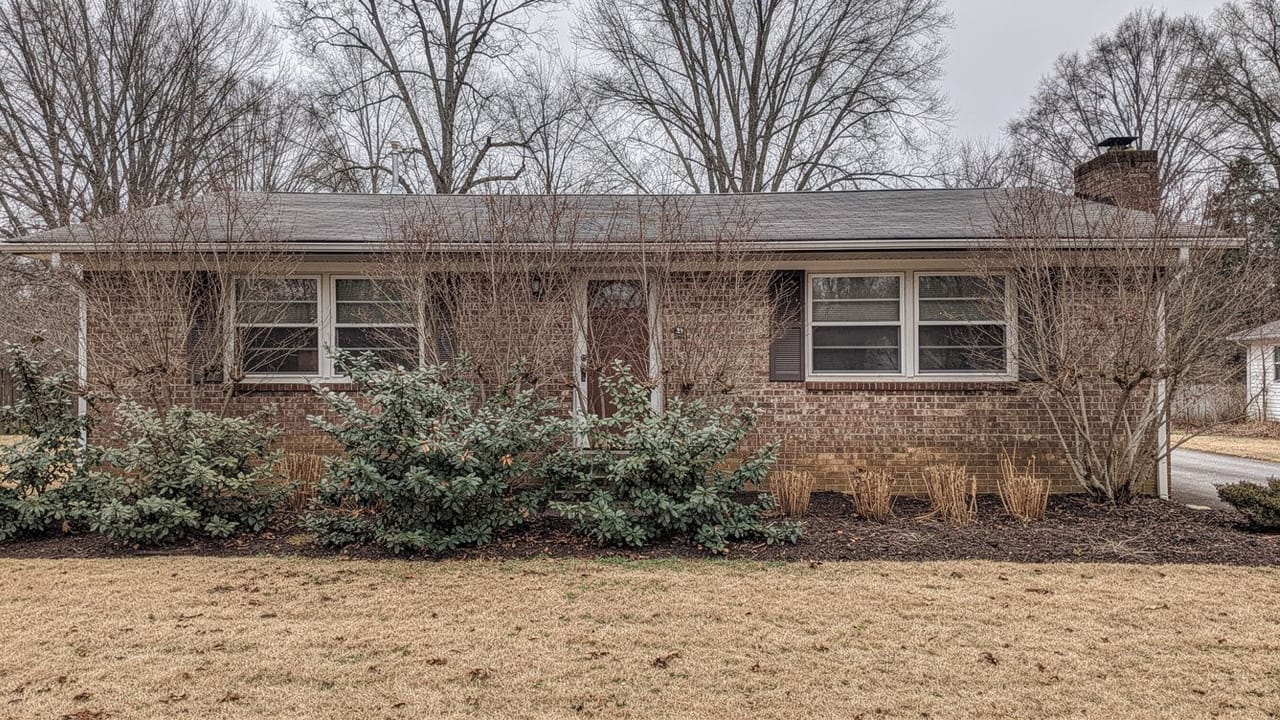
Foundation shrubs planted when a house was new tend to keep going until they cover the windows, crowd the walk and turn bare and woody inside. The usual response is to shear the outside a little smaller every year, which keeps the bare middle and moves the problem along. Many of those shrubs can be cut back far harder than people expect and grow back fuller. Some cannot, and cutting them hard leaves holes that never close. Here is how to tell which you have, based on what the University of Tennessee Extension advises, and how we handle it when we rework a bed through our planting service.
Can you cut an overgrown shrub back to the ground?
Many overgrown shrubs can be cut back nearly to the ground and will regrow, as long as the cut is made in late winter and the shrub is a kind that sprouts from old wood. UT Extension’s guide to pruning landscape trees, shrubs and ground covers calls severe renewal pruning sometimes the only way to bring a leggy or overgrown shrub back to full, vigorous growth, and it names hollies among them. Every branch is cut to within several inches of the ground, and buds already formed in the woody stems wake up as the weather warms.
The guide adds a point that surprises people: because the roots are already established, the new growth is generally stronger and faster than a newly planted shrub would manage. The new shoots need their tips pinched or cut so they branch. Iowa State University Extension’s page on overgrown shrubs describes the same cut on deciduous shrubs, to 4 to 6 inches in March or early April, then keeping several strong shoots the next late winter and removing the rest.
Which overgrown shrubs will not grow back from a hard cut?
Boxwood, juniper and yew are the overgrown shrubs that will not grow back from a hard cut, and both extension services say so. UT’s guide says to avoid severe renewal pruning on junipers and boxwood, and explains that juniper and yew carry their buds in the foliage, with almost none on older wood, so a cut back into old wood leaves nothing to sprout. Its table for junipers says the same in a line: new growth will not come from old wood.
Iowa State puts boxwood and yew in the same group and warns against cutting them back into dead or bare parts of the branches, because the gaps stay open. Its advice for junipers and pines that have outgrown their spot is that they often have to be replaced. On a foundation bed, that is usually our answer too. A boxwood that has swallowed a window can be thinned from the inside and kept from getting bigger, but it cannot be made small again, and a new shrub of the right mature size does better there. Our post on how far from the house to plant covers spacing the replacement so it does not end up in the same place.
When should you prune overgrown shrubs in Tennessee?
Overgrown shrubs in Tennessee are best pruned in late winter or early spring, while they are dormant and before the buds begin to swell, according to UT Extension. Stored energy is high then and the risk of freeze damage is low. The guide also says dormant pruning may cost some flowers on shrubs that bloom in spring, since those set their buds on last year’s wood.
A few groups have their own timing in UT’s guide. Shrubs that flower after July 1, such as crape myrtle, rose-of-sharon, butterfly bush and roses, bloom on the current year’s growth, and UT puts their pruning in late winter or early spring before growth starts. Shrubs kept for their berries, including holly, nandina, pyracantha, barberry and cotoneaster, are left until the fruit has lost its looks, with only light thinning in the dormant season. Our post on what to cut back in a fall cleanup covers what to leave alone in the fall, and late winter is when we come back for the hard cuts.
Thinning an overgrown shrub over three years
Thinning an overgrown shrub over three years gets the same result as a hard cut with less of a gap in the bed. Iowa State’s method takes out a third of the big old stems at ground level in the first late winter, half of what old wood remains the next year, and the rest in the third, thinning the new shoots as it goes. It names lilac, forsythia, beautybush, mockorange, viburnum and dogwood as suited to it, and UT lists forsythia, spiraea, weigela, mahonia, mock orange, nandina and eleagnus as shrubs that take thinning of about a third of their older canes.
The slower route matters most for spring bloomers. Iowa State says a shrub cut to the ground in late winter loses that spring’s flowers, and some, lilacs among them, may not bloom again for three to five years. Thinning a third at a time keeps most of the plant flowering while it renews. When we plan a bed in Franklin or elsewhere around Nashville, we mark each shrub as cut hard, thin over three years, or replace. To have us look at yours before late winter, ask for an estimate.
Sources
- University of Tennessee Extension, PB1619 Best Management Practices for Pruning Landscape Trees, Shrubs and Ground Covers — Severe renewal pruning in late winter for overgrown shrubs including hollies; avoid on junipers and boxwood; juniper and yew have almost no buds on old wood; prune while dormant before bud swell; timing for summer bloomers and fruiting shrubs; thinning a third of older canes
- Iowa State University Extension and Outreach, Pruning Large, Overgrown Shrubs — Three-year rejuvenation method; renovation to 4 to 6 inches in March or early April; spring bloomers lose that season’s flowers, lilacs may not bloom for 3 to 5 years; boxwood and yew cannot be renovated this way; overgrown pine and juniper often replaced
FAQ
Cutting Back Overgrown Shrubs: Which Ones Come Back — questions
Can overgrown boxwood be cut back hard?
No. UT Extension says to avoid severe renewal pruning on boxwood, and Iowa State warns against cutting boxwood back into bare or dead parts of the branches because the gaps do not fill in. An overgrown boxwood can be thinned from the inside and kept at its size, but one that is far too big is better replaced.
How do you rejuvenate an old overgrown shrub?
Either cut every branch to within a few inches of the ground in late winter, which UT Extension calls severe renewal pruning, or thin it over three years by removing a third of the oldest stems at ground level each late winter, as Iowa State describes. Both work only on shrubs that sprout from old wood.
Will a shrub still bloom after renewal pruning?
Not right away if it blooms in spring. Iowa State says a spring-flowering shrub cut to the ground in late winter loses that season’s flowers, and lilacs may not bloom for three to five years. Summer bloomers that flower on new growth are less affected, and thinning a third at a time keeps most flowers coming.
Should overgrown foundation shrubs be pruned or replaced?
Pruned, if they are shrubs like holly, forsythia or nandina that regrow from old wood; UT Extension says hollies can be renewed with a hard late-winter cut. Replaced, if they are boxwood, juniper or yew that have outgrown the spot, since those make almost no new growth from bare old branches.